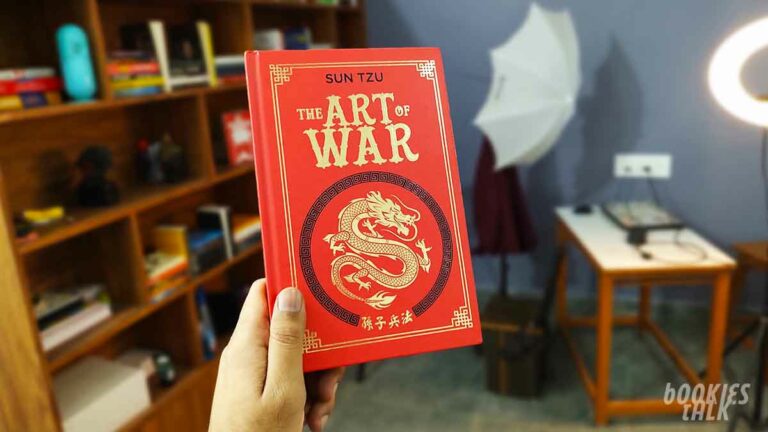
The Art of War by Sun Tzu


Furthermore, the string’s resistance to full decryption is its power. Unlike a proper code (which has a definitive solution), or a poem (which has a deliberate ambiguity), this string exists in a liminal state. It is a cipher without a key. It dares us to waste time—to wonder if 2m modifies jnwb or stands alone; to question if the hyphens are separators or part of a larger syntax. In doing so, it performs a subtle critique of our contemporary obsession with “solving” everything. Not all patterns are puzzles. Some are just static.
This is the essence of apophenia—the tendency to perceive meaningful connections between unrelated things. The string mslsl-shmal-jnwb-2m functions as a Rorschach test for the information age. We are so bathed in acronyms (NASA, COVID, QR code), passwords (Pa$$w0rd), and algorithmic hashes (a1b2c3) that our cognitive filters have become hyper-sensitive. We mistake entropy for encryption. We see a key where there is only a scratch. mslsl-shmal-jnwb-2m
In conclusion, mslsl-shmal-jnwb-2m is a beautiful accident. It is a modern memento mori for the logician, a reminder that the universe produces strings without meaning. But it is also a testament to human resilience. For even as we acknowledge its emptiness, we cannot help but fill it with wind, distance, and measure. We see a missile, a storm, a direction, a length. The string gives us nothing, and from that nothing, we build a world. That, perhaps, is the most human act of all. Furthermore, the string’s resistance to full decryption is
The brain cannot help itself. It begins to weave: A missile (mslsl) is blown by a shamal wind (shmal) toward a location in the northwest (jnwb) at an altitude of two meters (2m). A military report? A weather anomaly? A line of experimental poetry? In seconds, we have constructed a narrative, a miniature epic of dust and trajectory, from five fragments of noise. It dares us to waste time—to wonder if

HEY, I’m RAHUL MAKWANA & I’m a full-time blogger and reader. I will be your host on Bookies Talk.
 ByRahul Makwana
Last Updated:
ByRahul Makwana
Last Updated:
 ByRahul Makwana
Last Updated:
ByRahul Makwana
Last Updated:
 ByRahul Makwana
Last Updated:
ByRahul Makwana
Last Updated: