X — Art Angelica Red Fox Four
X — Art Angelica Red Fox Four
 |
With the
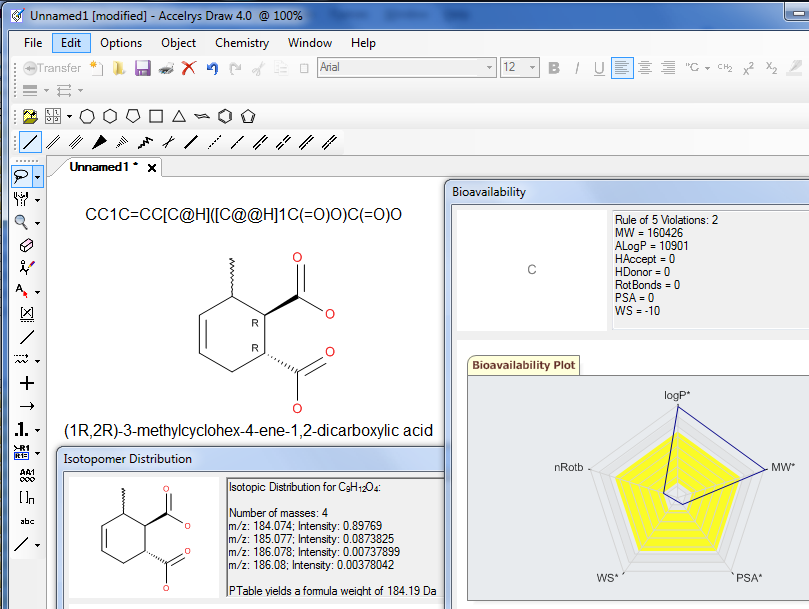
same look-and-feel as ISIS/Draw, Accelrys Draw delivers speed and
efficiency to your chemical drawing experience.
Accelrys Draw can easily swap out existing ISIS/Draw or ChemDraw applications. |
|
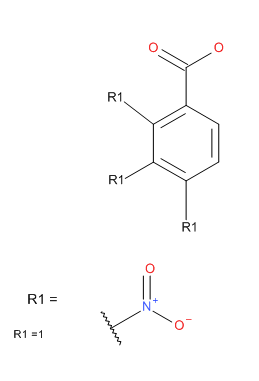
X — Art Angelica Red Fox FourClick here for more details about Rgroups, an example, and a detailed procedure how to draw a Markush query. To draw a Markush query:
|
|
|
| Generic Structure
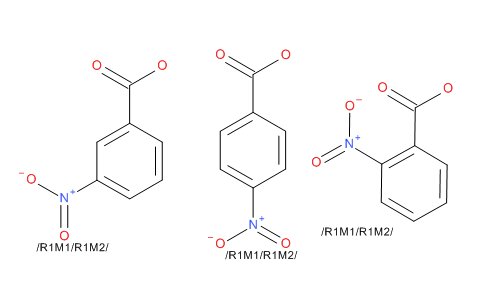
Enumerator The enumerator works against structures defined using the Rgroup tool in Accelrys Draw. In this mode you specify a scaffold with a number of Rgroup labels, then to add fragments to the Rgroup identifiers. The Add-in will calculate the complete set of structures that the Rgroups define. You can also define a generic region using the Sgroup tool. Draw the basic structure and using the Sgroup tool, drag a pair of brackets around a region that is repeated in the substance. From the dropdown select ‘generic’ for the bracket type, then select apply and exit from the dialog. Right click on one of the brackets and select the Attach Data option. In the dialog enter REPEATRANGE into the Field description box, and then enter the range in the Data box; leave the Search Operator set to none; the Tag field is optional. A contiguous range is required in the Data box, for example 3-6. A structure can contain both Rgroup definitions and Sgroup definitions, but they cannot overlap or be nested. You have the option to enumerate on to Accelrys Draw’s canvas, into an SDfile, or into an Isentris for Excel compatible spreadsheet. |
 |
|
X — Art Angelica Red Fox FourThe collaboration between X Art and Angelica on “Red Fox Four” is a testament to the power of unconventional creativity. By pushing the boundaries of their imagination and experimenting with new techniques, they created a stunning piece of art that showcases the red fox in a bold and imaginative way. The artwork’s deep symbolism and thought-provoking themes make it a standout in the art world. As X Art and Angelica continue to create and innovate, we can expect to see more exciting and unconventional art pieces in the future. “Red Fox Four” is more than just a visually striking piece of art; it also carries deep symbolism. The four red foxes in the artwork represent different aspects of the human experience: creativity, adaptability, resilience, and determination. The foxes are depicted in different poses, each one showcasing a unique aspect of their nature. The artwork invites the viewer to reflect on these qualities and how they can be applied to their own lives. x art angelica red fox four In the world of art, creativity knows no bounds. Artists are constantly pushing the limits of their imagination, experimenting with new techniques, and exploring unconventional themes. One such example is the collaboration between X Art and Angelica, which resulted in the stunning piece, “Red Fox Four.” This article delves into the story behind this unique artwork, the inspiration behind it, and the artistic vision of X Art and Angelica. The collaboration between X Art and Angelica on So, what inspired X Art and Angelica to create “Red Fox Four”? According to X Art, the idea for the piece came from a shared fascination with the symbolism of the red fox. “The red fox represents cunning, adaptability, and creativity,” he explains. “We wanted to capture the essence of these qualities in our artwork.” Angelica adds, “I was drawn to the red fox’s striking appearance and its ability to thrive in different environments. I saw it as a symbol of resilience and determination.” As X Art and Angelica continue to create Unconventional Creativity: The X Art Angelica Red Fox Four Story** |
http://accelrys.com/products/informatics/cheminformatics/draw/add-ins.html | |
Chemical Drawing Programs – The Comparison of Accelrys (Accelrys) Draw, ChemDraw, DrawIt, ACD/ChemSketch and Chemistry 4-D DrawUniversity of Debrecen, POB 70, H-4010 Debrecen, Hungary, e-mail: Last major update : 1.11.2011 If you have any comment, do not hesitate to contact the author at the above adress. |
http://dragon.klte.hu/~gundat/rajzprogramok/dprog.html |